
Search Ohio Divorce Records
Ohio divorce records are public court documents kept at the county level. Each of Ohio's 88 counties has a Clerk of Courts who files, stores, and gives out copies of divorce case records from the Court of Common Pleas. You can look up basic case info through online search tools or go to the courthouse in person for the full file. The state does not keep a central database of divorce decrees. That means you need to know which county handled the case. Once you have the right county, you can search by name or case number and get copies of the decree and other court papers from the Clerk of Courts.
Ohio Divorce Records Overview
Where to Find Ohio Divorce Records
Divorce records in Ohio are kept at the county courthouse. The Clerk of Courts in each of the 88 counties is the official record keeper for the Court of Common Pleas, which includes the Domestic Relations Division. This is the court that handles all divorce and dissolution cases. The Clerk files, indexes, and stores every document in a case from the first petition to the final decree. When you need a copy, you go to that office or use their online tools if the county has them.
There is no single state office that holds all Ohio divorce records. The Ohio Department of Health, Bureau of Vital Statistics keeps birth and death records but does not maintain divorce records. Certified copies of divorce decrees can only come from the county where the case was filed. The Bureau of Vital Statistics notes that divorce records must be requested from the specific county Clerk of Courts. This is different from some other states that have a central vital records office for all record types.
The Ohio History Connection Archives holds divorce records for a few counties, mostly older ones. They maintain an index of divorces from 1954 to the present through their collections. For records before 1954, there is no statewide index. You must know the county where the divorce took place to find it.
Note: The Ohio Department of Health does not issue divorce decrees. Contact the Clerk of Courts in the county where the divorce was filed to get certified copies.
How to Search Divorce Records in Ohio
Ohio gives you a few ways to search for divorce records. Online tools are the fastest for basic case details. Going to the courthouse works best when you need the full file or certified copies of a decree.
Many Ohio counties have online case search systems. The Ohio Courts website links to all trial courts in the state. From there you can find a county's own search portal. Some larger counties like Cuyahoga, Franklin, and Hamilton have robust online docket systems that let you look up divorce cases by name, case number, or filing date. Smaller counties may have more limited online access. In those cases, you can call or visit the Clerk of Courts to ask about a specific case.
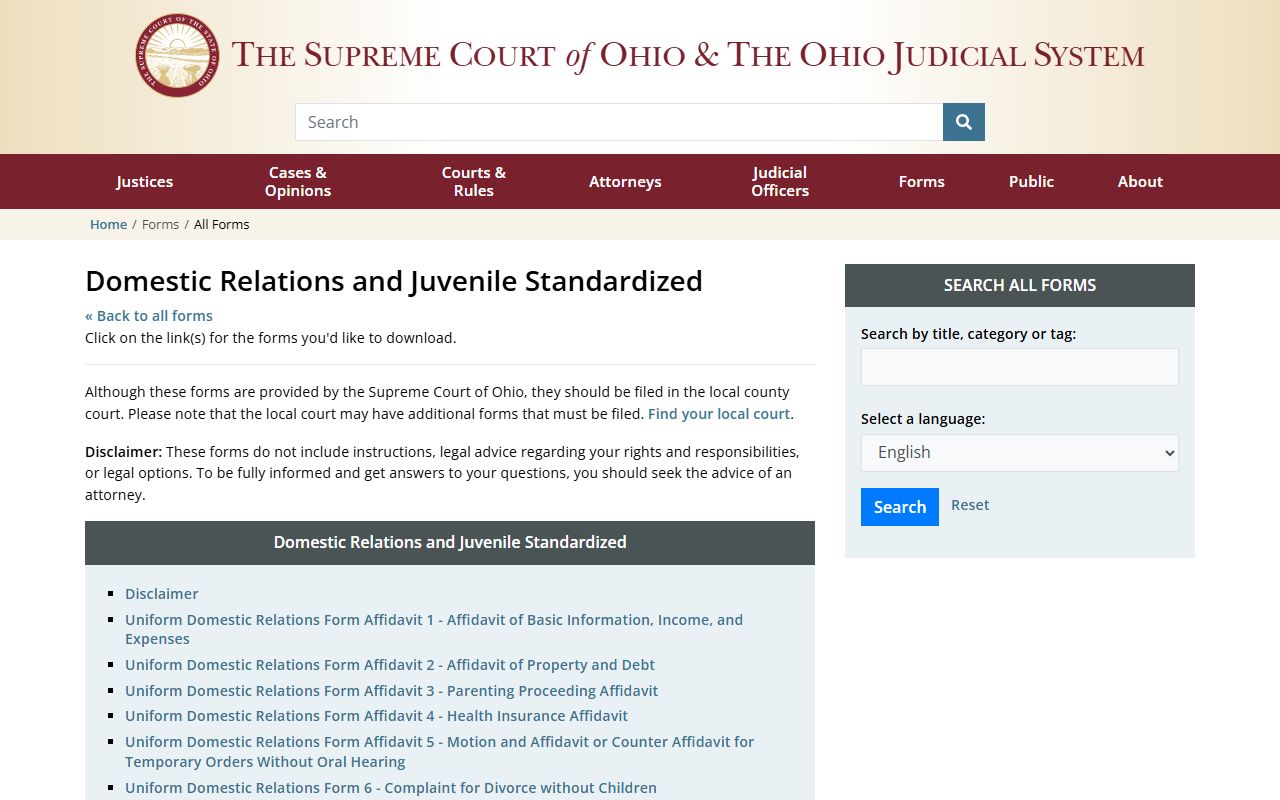
The Supreme Court of Ohio provides links to court info for all 88 counties. This site also has standardized forms for domestic relations cases. You can get Uniform Domestic Relations Forms here at no cost. These are the same forms used in every Ohio county for divorce and dissolution filings.
To search for Ohio divorce records, you will need:
- Full name of at least one spouse
- The county where the case was filed
- Case number if you have it
- Approximate year of filing
Types of Ohio Divorce Records
Ohio offers two ways to end a marriage. A divorce is a contested or uncontested case filed by one spouse under Ohio Revised Code Section 3105. A dissolution is when both spouses agree on all terms and file a joint petition. Both create court records that the Clerk of Courts stores and makes available to the public.
The final decree is the key document in any divorce case. This is the court order that ends the marriage and spells out property division, custody terms, child support, and spousal support. A judge signs it, and the Clerk files it in the case record. Most people who need a divorce record are looking for this decree. Certified copies carry the court seal and can be used for legal purposes like name changes or proof of marital status. The Ohio Legal Help website has a form assistant that walks you through the dissolution forms step by step.
A typical Ohio divorce case file includes the petition, summons, financial affidavits, temporary orders, a separation agreement or trial findings, and the final decree. The Supreme Court of Ohio standardized forms are used in all counties for these filings. Local courts may have their own additional forms too.
Ohio Divorce Records and State Law
All divorce law in Ohio falls under Title 31 of the Ohio Revised Code, which covers Domestic Relations. Section 3105 lays out the rules for divorce, alimony, annulment, dissolution of marriage, and legal separation. Ohio is one of the states that allows both fault and no-fault grounds for divorce. Incompatibility is the most common no-fault ground. Fault grounds include adultery, extreme cruelty, and habitual drunkenness.
You must live in Ohio for at least six months before you can file. You also need to have lived in the county where you file for at least 90 days. These rules are set out in the Ohio Revised Code. If both spouses agree on everything, they can file for dissolution instead, which is faster and simpler. The Supreme Court Domestic Relations Resource Guide has more info on court procedures and resources for families going through this process.
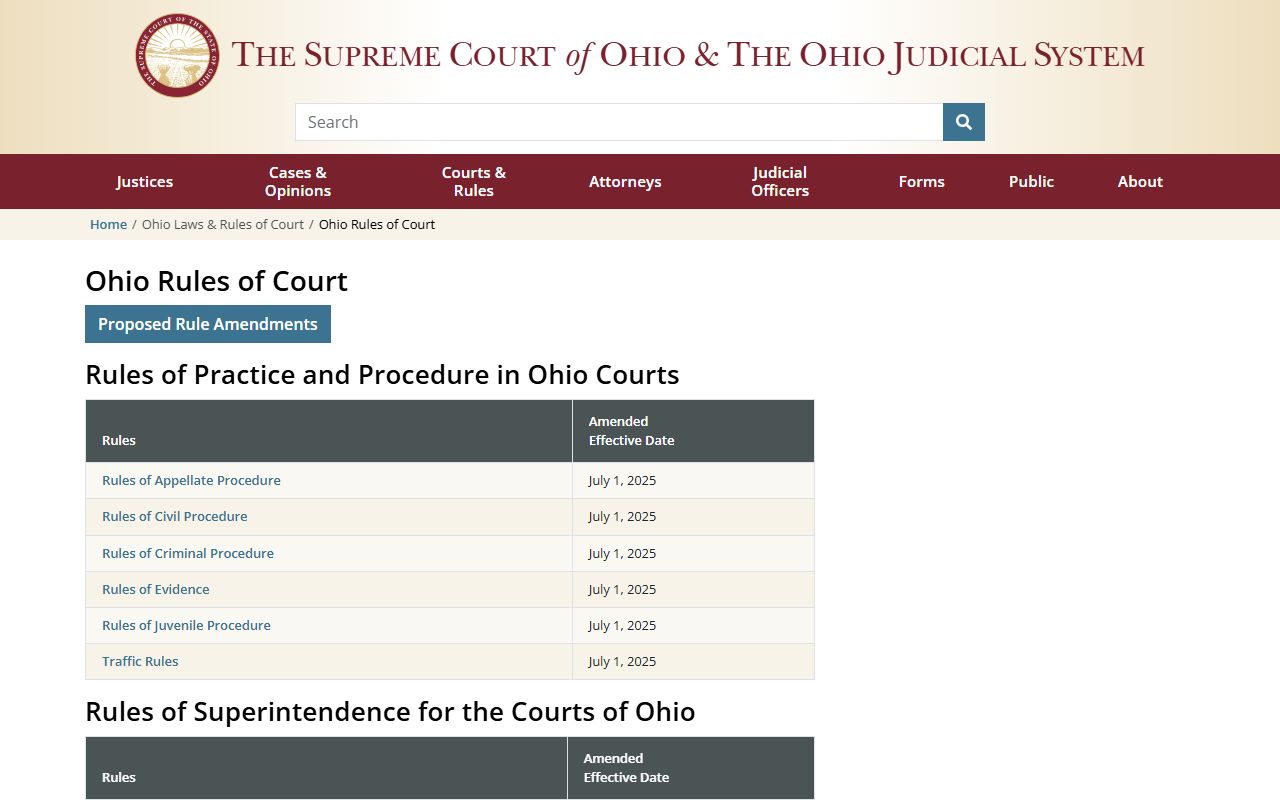
Court records in Ohio are generally public under Ohio Revised Code Section 149.43, the Public Records Act. This means anyone can ask the Clerk of Courts for copies of divorce records. You do not have to be a party to the case. Some parts of the file may be sealed or restricted, but the decree itself is almost always public. The Ohio Supreme Court has ruled that wholesale sealing of divorce records is not proper without specific justification. The Ohio Rules of Court and Rules of Superintendence set the standards for what can and cannot be sealed.
Divorce Filing Fees in Ohio
Filing fees for divorce in Ohio vary by county. Most counties charge between $300 and $450 to file a new divorce or dissolution case. Some counties charge more when children are part of the case. For example, Hamilton County charges $325 without children and $375 with children. Seneca County charges $450 for either type. Each Clerk of Courts sets its own fee schedule within state guidelines under Ohio Revised Code Section 2303.20.
Getting copies of existing divorce records has separate fees. Standard copies typically cost $0.10 to $0.25 per page. Certified copies cost more, usually $1.00 to $3.00 per certification on top of the copy fee. These fees also vary by county, so call the Clerk of Courts to ask about exact costs before you go.
Note: Filing fees change from time to time. Contact the Clerk of Courts in your county to confirm current costs before filing.
Getting Copies of Ohio Divorce Records
To get copies of a divorce record in Ohio, contact the Clerk of Courts in the county where the case was filed. You can visit the courthouse in person during business hours. Most offices are open Monday through Friday from 8:00 a.m. to 4:00 p.m. or 4:30 p.m. Staff can look up the case by name or case number and make copies while you wait. Bring a valid ID with you.
Some counties accept requests by mail. Send a written request with the names of the parties, the approximate date of the divorce, and the case number if you have it. Include a check or money order for the copy fees. A self-addressed stamped envelope helps speed things up. Mail requests may take one to two weeks depending on how busy the office is. Some counties also accept email requests for records. Check the county Clerk of Courts website for their specific process.
Many counties now offer online case search tools. You can find basic case info like party names, filing dates, and case status. Full document images may not be available online for all counties. For the actual decree or other papers from the file, you may still need to contact the courthouse. The Ohio Courts website links to each county's court page where you can find local search tools and contact info.
Legal Help for Divorce in Ohio
Several groups offer legal help with divorce in Ohio. Ohio Legal Help provides a free form assistant for dissolution cases. It walks you through the questions and puts together a packet of forms you can print and file. The site also has guides on court procedures and links to local resources.
If you are filing in Cuyahoga, Montgomery, or Lorain County, Ohio Legal Help points you to Virtual Self Help Centers for those courts. These centers give you step-by-step help with forms and filing. The Supreme Court standardized forms are free to download and are accepted by all Ohio courts. Local courts may also have their own forms and instructions for people without a lawyer.
Are Ohio Divorce Records Public
Yes. Divorce records in Ohio are generally public. The Ohio Public Records Act under Section 149.43 of the Ohio Revised Code makes court records available to anyone who asks. You do not need to be a party to the case. You don't need to give a reason for your request. The Clerk of Courts must provide copies within a reasonable time.
Some parts of divorce files may have limited access. Financial source documents like tax returns can be restricted. Social security numbers and bank account numbers get redacted. A judge may seal certain records if there is a good reason, but this is not common. The Ohio Supreme Court has made clear that courts cannot seal entire divorce files without explaining why less restrictive options like redaction would not work. The Rules of Superintendence govern public access to all court records in Ohio.
Most Ohio divorce records are open to the public. Financial source documents and some child-related reports may have restricted access.
Browse Ohio Divorce Records by County
Each of Ohio's 88 counties has its own Court of Common Pleas and Clerk of Courts that handles divorce cases. Pick a county below to find local contact info and resources for divorce records in that area.
Divorce Records in Major Ohio Cities
Residents of major cities file for divorce at the Court of Common Pleas in their county. Pick a city below to find out where to go for divorce records in that area.